A New Age in Property?
19/11/15
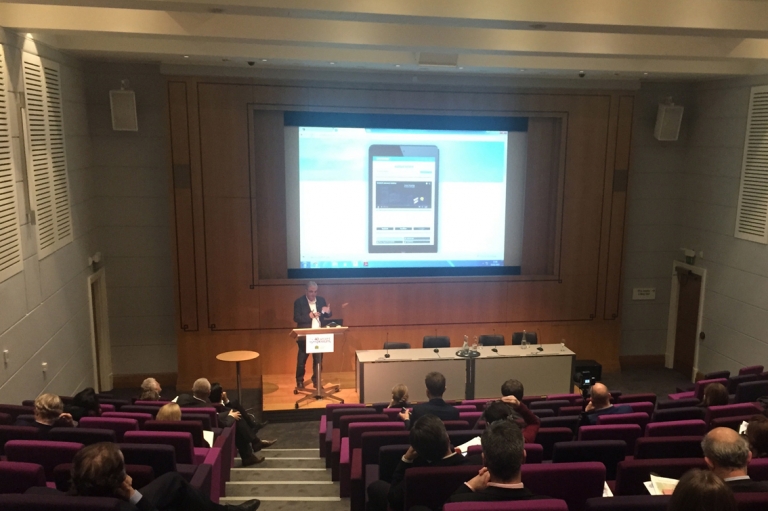
After a full day of at the BRE 40% Symposium at the Wellcome Institute hearing talks on funding models and risk, the future of the UK’s energy, imminent grid capacity issues and a plethora of amazing new build and retro-fit projects, Tim Gardom took to the stage to talk about something a little different.
“Today we have heard about some really amazing projects…But ‘Who ya gonna tell?’” was Tim’s question d’urgence.
The property sector is rapidly approaching a new era, an era beyond compliance and merely ticking boxes, a time when how a company does what it does and whether people know about it is going to be equally, if not more important, than the thing it actually produces.
At the most basic level this means communication with people.
At the moment the vast majority of people who come in contact with a sustainable project (e.g. the people who work in the building, the community it is being built in, the passing public) have no idea about the engineering, design, teamwork and technologies that are being employed right in front of them!
Right now, what the industry is doing is the industry’s best kept secret!
Instead of talking about what is happening in the sector, current and potential trends, future thinking, etc. Tim presented a dynamic and entertaining demonstration, using the tablet emulator to full effect, of how to tell the sustainability story. He showed the power of telling the story in the location that it’s happening. This is of course what City-Insights does best, any story, any device, anywhere – THE POWER OF HERE.
The points Tim was making; delivering key, curated information in an open and transparent way directly to devices people already own, proved to be a fitting end to a day whose key message was one expectant of imminent change. Many references were made to ‘the next 12 months’, new legislation and business models, new financial products and the realisation of influence at multiple levels… This combined with the rising importance of brand awareness and communication, the image and message all point to a time where people are no longer buying ‘stuff’ they are buying quality, ethic, safe practice...they will become more discerning about where the money goes and why.
What you say about your company, how you say it and more importantly who and how many people you tell it to are gaining serious financial traction and demonstrable returns, as Jess Piltz of RBS clearly demonstrated in the morning session.
Given the significant changes that many see coming, and the rapidity with which change can happen in a world of instantaneous global communication, the field stands wide open. Now is the time for progressive companies to take the lead and truly engage with the wider public, to genuinely broadcast their message and demonstrate the sustainable, eco-friendly, futuristic technology and community work that is taking place. Once a major player tries it and sees the returns the sheep will follow.
Engaging with people, building a relationship with them and showcasing the great works being done in dynamic, entertaining and accessible ways, probably though mobile digital, will soon be a must. By doing so a company can hugely increase its social capital, its soft power, its ability to affect change through the hearts and minds of people and in return be changed by the hearts and minds of people. This ‘symbiosis’, if you will, will very soon separate the mediocre and good companies from the great, the Facebooks from the Myspaces.
Over half the world’s population are now living in urban environments that number is set to increase to around 66% by 2050. We already have over three and a half billion unique mobile users, increasing at about 185 million year-on-year, the technology and the audience are there for the industry. The challenge now is to find the best ways to get these message across, there are many options from a technological point of view but at the end of the day there will be one deciding factor – CONTENT.
If it isn't interesting, fun, engaging and relatable then people won’t buy it. Here is where the Knowledge Economy will play a role – put simply, the knowledge economy is what happens when you put highly educated brain in contact with a computer and generate income from the output – possibly through some sort of genuine incorporation, and re-evaluation of the role of the knowledge and experience of the human sciences in the corporate world. Understanding the people who will have contact with a project enables companies to tailor a project and the way it is publicised to the people and the place where it is located. Understanding how people act and react to different situations and stimuli related to a company or project may impact how a project is undertaken, the response of those affected and the possible increased returns due to value-adding information.